If you are thinking about a condo or townhome in Utica, you are not imagining things if the options feel limited. Attached homes here make up a smaller, more localized slice of the market, and listings can vary a lot by location, layout, and monthly costs. This guide will help you understand where to look, what price patterns to expect, and what to review before you make an offer. Let’s dive in.
Utica's condo and townhome market
Utica’s condo and townhome inventory is relatively small. Current listing snapshots show only a handful of condo and townhouse options in the city, which means the market can feel tight if you want low-maintenance living.
That small inventory also means each listing can carry more weight. A single unit can shape your impression of value, so it helps to compare not just asking prices, but also location, square footage, parking, and association fees.
The broader Utica market snapshot shows a median listing price around $188,000, median days on market of 38, and a median listing price per square foot of about $118. For attached housing, though, pricing can move above or below that depending on neighborhood and the type of property.
Where condo and townhome options appear
Most current condo and townhouse-style listings are clustered in the 13501 and 13502 ZIP codes. You will often see activity around areas such as Genesee Court, Foery Drive, Weaver Court, McVean Street, Mildred Avenue, and Tilden Avenue.
That concentration matters because attached housing in Utica is not spread evenly across the city. If you are searching for a condo or townhome, your choices may depend as much on micro-location as on budget.
West Utica options
West Utica offers one of the clearest condo examples in the city. It is a mostly residential area between downtown and Yorkville, and current condo activity there includes Genesee Court, a gated community.
For buyers who want a lower-maintenance setup, this type of community may be appealing because association coverage can include major exterior and utility-related costs. In one current listing feed, Genesee Court HOA coverage includes heat, hot and cold water, sewer, landscaping, snow removal, exterior building maintenance including roof work, and trash removal.
South Utica options
South Utica is known for its historic character, restaurants, parks, and transit access. Current condo examples in this area include Foery Drive, which represents a more premium tier of attached housing in Utica.
If location and a more polished condo setting are high on your list, South Utica may be worth a close look. Inventory can be limited, but the available options may offer features that appeal to buyers who want convenience with a more established feel.
Downtown Utica options
Downtown Utica offers a different housing style. It is more urban and more shaped by conversion and redevelopment, with loft-apartment projects influencing the local housing stock.
For buyers who like a city feel, downtown may offer a different type of attached-home experience than a traditional condo complex. Pricing snapshots still show townhouse medians around $175,000, but the housing format can look different from what you might find in West or South Utica.
North Utica options
North Utica tends to lean more residential, with post World War II housing patterns and limited commercial property. Current market snapshots suggest that modern townhomes are available there, and townhouse medians are higher, around $280,000.
If you want a more townhouse-oriented feel, North Utica may deserve attention. It can offer a different value equation than downtown or older condo buildings, especially if newer design and attached garages matter to you.
What prices and fees can look like
One of the biggest mistakes buyers make is focusing only on asking price. With condos and townhomes, the monthly fee structure can change the real cost of ownership in a meaningful way.
At the more affordable end, some townhouse-style listings in Utica have appeared from about $130,000 to $249,900. On the higher end, pending examples such as a Weaver Court condo or townhouse-style home have been listed around $305,000.
Foery Drive shows how broad the price range can be within one building. One current listing shows a 1-bedroom, 1.5-bath condo with 1,308 square feet, a 1-car garage, and a $515 monthly HOA at $244,900, while other current feeds in the same building show larger units above $300,000.
The key takeaway is simple: the sticker price is only part of the story. A lower-priced condo with a broad HOA package may be more predictable month to month than a cheaper-feeling home that leaves you covering more upkeep on your own.
Condo vs townhome in Utica
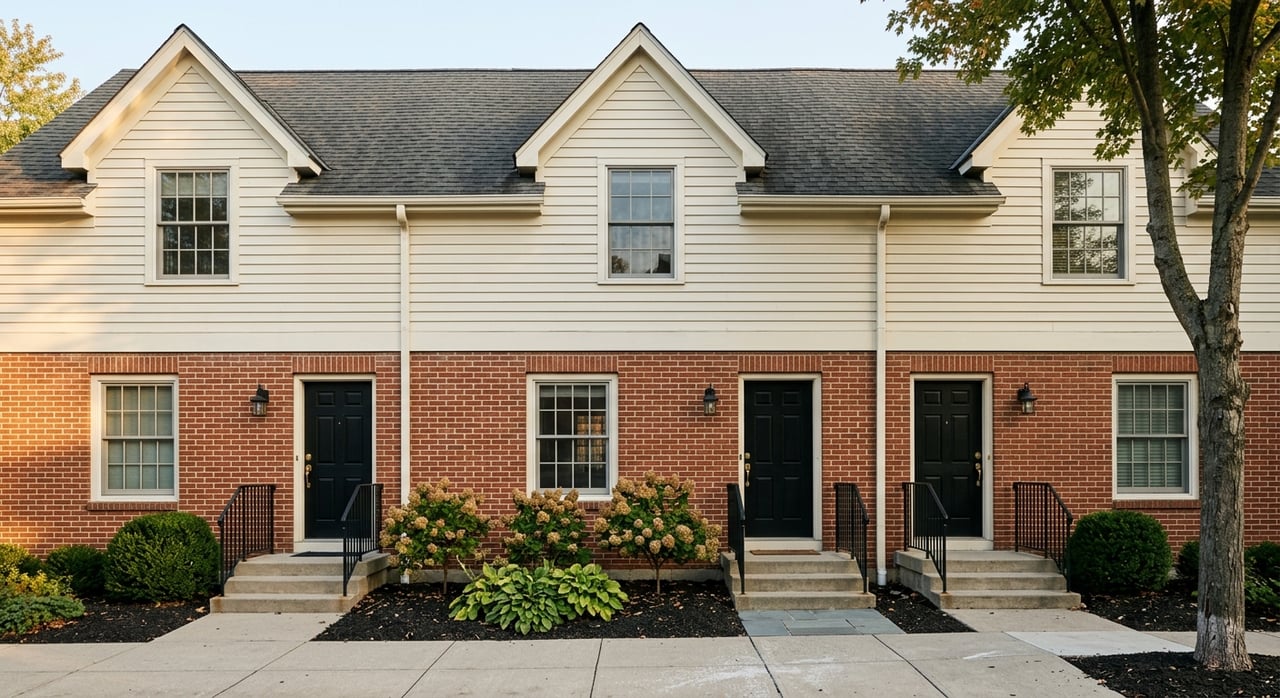
In Utica, the terms “condo” and “townhouse” do not always describe the same ownership structure. Some listings found in townhouse searches may actually be attached-income properties, duplex-style homes, or other attached residences rather than a classic planned townhome community.
That is why it helps to slow down and verify what you are actually buying. If you want a true townhouse community, confirm whether the property is part of a planned HOA or condominium structure instead of assuming the search label tells the full story.
Here is a simple way to think about it:
| Feature | Condo | Townhouse-style home |
|---|---|---|
| Ownership structure | Unit ownership plus shared interest in common elements | Can vary widely in Utica listings |
| Maintenance | Often more bundled through HOA | May be bundled, limited, or owner-managed depending on setup |
| Common areas | Typically clearly defined | Varies by development or property type |
| What to verify | Offering plan, fees, coverage, rules | Whether it is a planned community or another attached-home format |
What New York buyers should review
In New York, condo ownership generally means you own your unit plus an undivided interest in the common elements. The New York Attorney General recommends reading the entire offering plan and consulting an attorney before signing a purchase agreement.
That advice matters even more when inventory is limited and you feel pressure to act quickly. A well-organized review now can help you avoid expensive surprises later.
Review the offering plan carefully
The offering plan can explain much more than square footage and monthly fees. For townhouse-type developments, it should spell out details about roads, sidewalks, drainage systems, retaining walls, and whether internal roads are owned by the condo or dedicated to the town or village.
This can affect both your obligations and your expectations. If you are choosing attached housing for simplicity, you want to know exactly which parts of the property you are paying to maintain through your fees.
Understand HOA rules and costs
Homeowners associations are created to manage common costs and shared property issues. In New York, HOA rules can address topics like pets, fence height, driveway parking, and the maintenance of roads, roofs, and recreation facilities.
Before you commit, review what the HOA covers and what it does not. Two communities with similar list prices can feel very different once you factor in utilities, exterior maintenance, snow removal, and long-term repair responsibilities.
Ask for financials and board minutes
For resale condos and townhomes, financial reports and board minutes can tell you a lot. They may reveal deferred maintenance or upcoming building-wide repairs involving facades, roofs, plumbing, boilers, or elevators.
This is one of the most important due diligence steps for attached housing. A unit may look move-in ready, but the bigger financial story often sits at the building or association level.
Check board control in newer projects
If the development is newer, ask who controls the board. According to the New York Attorney General, sponsors generally give up board control after selling more than 50 percent of the common interest or after five years from the first closing, whichever comes first, though newer projects can vary.
That does not automatically make a property good or bad. It simply gives you more context about how decisions are being made and how mature the community’s governance may be.
Who these homes fit best
Condos and townhome-style homes can be a strong fit if you want less exterior upkeep. Buyers who are downsizing or juggling a busy schedule often like the tradeoff of fewer maintenance chores in exchange for a more predictable monthly cost structure.
They can also work well for first-time buyers, as long as you compare the HOA fee against the maintenance it replaces. In Utica, some fees are broad and utility-inclusive, while others are narrower but still significant.
If you are relocating and want a smoother move, attached housing may also simplify your to-do list after closing. Fewer exterior tasks can make it easier to settle in, especially if your timeline is tight.
Smart next steps for your search
Because Utica’s attached-home inventory is limited, a clear plan matters. You do not want to wait too long, but you also do not want to confuse a fast-moving market with a reason to skip the details.
Here are a few smart next steps:
- Decide whether you want a true condo, a planned townhome community, or simply an attached home with low maintenance
- Compare monthly HOA costs alongside mortgage, taxes, and insurance
- Review what the fee covers, especially utilities, snow removal, landscaping, and exterior repairs
- Ask for board minutes and financial documents early in the process
- Verify listing details carefully, since syndicated feeds can show conflicting unit information
- Narrow your search by area, with West and South Utica offering clearer condo examples, downtown leaning more conversion-oriented, and North Utica showing more townhouse-friendly patterns
When the right property appears, being organized helps you move with confidence. That is especially true in a small niche where each listing can be very different from the next.
If you want help comparing condo and townhome options in Utica, understanding fee structures, and building a step-by-step plan that fits your budget and goals, Azza Giorgi is here to help.
FAQs
What is the condo market like in Utica, NY?
- Utica’s condo market is small, with only a handful of active listings at a time, and most options are concentrated in a few areas and ZIP codes.
Where can you find condos and townhomes in Utica?
- Current options tend to cluster in West Utica, South Utica, Downtown Utica, and North Utica, especially around areas like Genesee Court, Foery Drive, and Weaver Court.
What should you check before buying a Utica condo?
- You should review the offering plan, HOA rules, monthly fees, board minutes, and financial reports to understand maintenance responsibilities and possible future costs.
Are townhouse listings in Utica always part of a planned community?
- No. Some townhouse-style listings may actually be attached-income properties or other attached homes, so you should verify the ownership and HOA structure before making a decision.
Why do HOA fees matter when buying in Utica?
- HOA fees can cover major costs like utilities, snow removal, landscaping, and exterior maintenance, so they can significantly affect your true monthly housing cost.